
When Should Children Have an Eye Exam? Eye Checks by Age
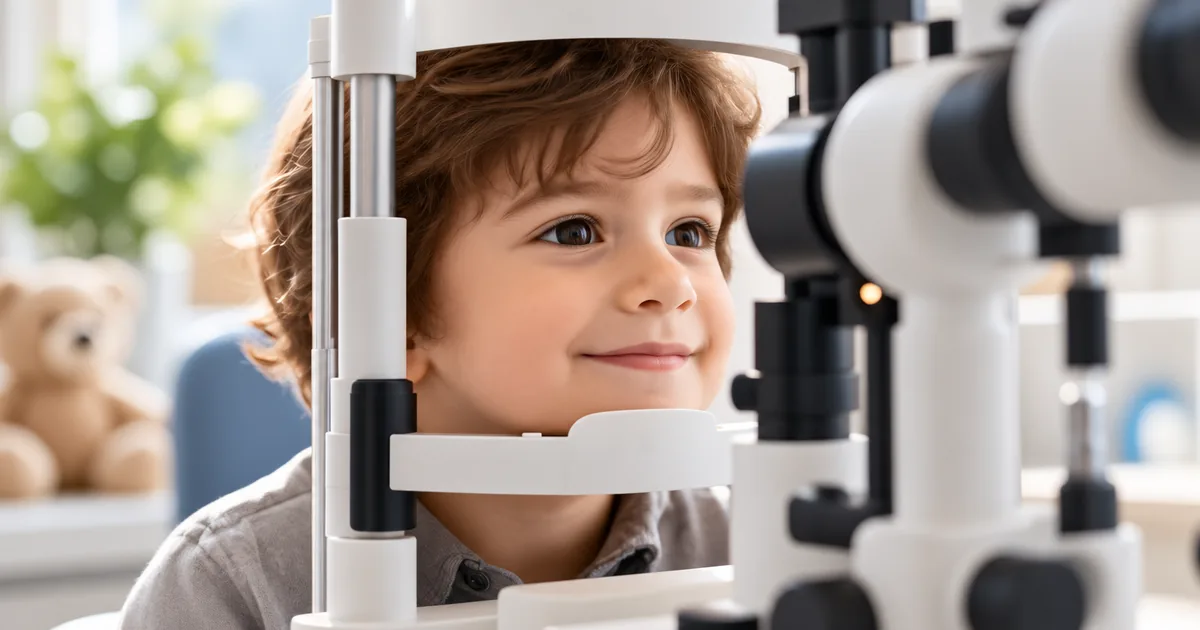
Children’s eye health is important for healthy visual development and school performance. Children may not always notice a vision problem or be able to explain their symptoms to their families.
Early recognition of problems such as amblyopia (lazy eye), strabismus, myopia, hyperopia and astigmatism is important for healthy visual development.
So when should children have an eye examination? At what age should the first eye exam take place, how often should children be checked, and which eye conditions can occur in childhood?
When should a child have their first eye examination?
Assessment of eye health begins from birth. In newborns, the appearance and movements of the eyes, pupils and basic findings such as the red reflex can be evaluated.
- Newborn period
- Between 6 months and 1 year
- Between 3 and 5 years
- After age 5, regular follow-up according to the child’s needs
The timing and frequency of a comprehensive examination are not identical for every child. A child should be evaluated by an ophthalmologist at any age if there is an obvious eye turn, one eye looks different, a white pupil is noticed, the baby does not track objects, persistent watering or discharge occurs, the eyelid droops, there is a history of prematurity, or there is a family history of strabismus or childhood eye disease.
Eye examinations by age
Eye examination between 0 and 1 year
Eye development, eye movements, alignment and responses to visual stimuli can be assessed. An examination should not be delayed if a baby does not follow light or moving objects, has an obvious eye turn or has a white appearance in the pupil.
Eye checks between 1 and 3 years
Even before a child can read letters, the visual system can be evaluated using age-appropriate methods. When necessary, refractive errors that may create a risk for glasses need, strabismus or amblyopia are investigated.
Eye examination between 3 and 5 years
Visual acuity can be assessed in greater detail at this age. This period is particularly important for identifying amblyopia early, because a child may continue daily life using the better-seeing eye without realising there is a problem.
Eye examination from age 5 onwards
During the school years, regular assessment of visual function is important. Difficulty seeing the board, problems while reading, headaches, squinting or sitting very close to the television are reasons to arrange an eye examination.
The article notes that AAPOS recommends repeated vision screening every 1–2 years from age 5 onwards.
Which eye conditions occur in children?
Amblyopia (lazy eye)
Amblyopia is one of the childhood eye problems in which early diagnosis and treatment are important. Strabismus, a marked prescription difference between the eyes or high refractive errors may contribute to amblyopia. Children often do not notice it themselves.
Strabismus
Strabismus means that the two eyes do not point at the same target at the same time. An eye may turn inward, outward, upward or downward. If an eye turn is noticed, the examination should not be postponed on the assumption that the child will simply grow out of it.
Myopia
Children with myopia may have difficulty seeing distant objects. They may struggle to see the board, move closer to the television, squint or have difficulty reading distant writing. Regular checks are important during the school years.
Hyperopia
A certain degree of hyperopia can occur in childhood, but high hyperopia may affect visual development and can be associated with inward eye turning in some children. The significance of the prescription for visual development should therefore be considered, not only whether a prescription exists.
Astigmatism
Astigmatism can cause blurred or distorted vision. High astigmatism or a significant difference between the two eyes can create a risk for amblyopia during childhood.
Childhood cataract
Cataract is not limited to older adults. Congenital or childhood cataracts can occur. A white pupil, eye turning or delayed visual development should be assessed without delay.
Drooping eyelid
A markedly drooping eyelid in a child may be more than a cosmetic issue. If it blocks the visual axis or creates a difference in visual development between the eyes, amblyopia may develop.
How can you tell if your child may have an eye problem?
- Frequently squints
- Sits very close to the television
- Holds books unusually close
- Has difficulty seeing the board
- Covers one eye to look
- Tilts the head to one side
- Has an eye turn
- Gets tired quickly while reading
- Frequently complains of headaches
- Brings visual objects closer than other children
A lack of complaints does not necessarily mean that both eyes are seeing normally. Amblyopia and some refractive errors may go unnoticed by the child.
Which tests may be performed during a child’s eye examination?
The content of the examination depends on the child’s age and cooperation. When needed, assessment may include:
- Visual acuity measurement
- Eye alignment and strabismus assessment
- Eye movement assessment
- Measurement of refractive error
- Pupil and anterior segment examination
- Fundus examination
- Assessment of binocular vision and depth perception
- Dilated examination and cycloplegic refraction
Dilating drops can be particularly useful when an accurate measurement of a child’s refractive error is required.
Why is wearing glasses important for children?
Glasses in childhood are not used only to make vision clearer. The visual system is still developing, and a significant prescription difference between the eyes or a high refractive error can affect visual development. Children prescribed glasses should therefore use them as advised and attend recommended follow-up visits.
Does screen use affect children’s eyes?
Long periods of uninterrupted near focus can contribute to eye fatigue, dryness and temporary blur. Age-appropriate limits, breaks from prolonged near work and adequate outdoor time are important.
If a child persistently squints, moves close to the television or cannot see the board, these signs should not automatically be attributed only to screen use; myopia, astigmatism or another eye problem may be present.
When should a child be taken to an ophthalmologist urgently?
- A white pupil
- Sudden loss or marked reduction of vision
- New and obvious strabismus
- Eye trauma
- Severe eye pain
- Marked redness with light sensitivity
- Clearly abnormal eye movements
- Keeping one eye closed continuously
- An eyelid drooping enough to obstruct vision
These findings should not wait for a routine appointment.
Child eye examinations in Bağcılar and nearby areas
Regular eye checks are important for families living around Bağcılar, Güneşli, Bahçelievler, Güngören and Bakırköy. Preschool assessment can help identify problems such as amblyopia and strabismus, while school-age follow-up is important for myopia, astigmatism and other vision problems.
At the practice in Güneşli Meydan, children can be evaluated for eye health and visual problems when an examination is needed.
Frequently asked questions about children’s eye examinations
At what age should a child have their first eye exam?
Eye assessment begins from birth. If there is a symptom, risk factor or abnormal appearance, a child can be taken to an ophthalmologist at any age.
How often should children have eye examinations?
The interval depends on age, whether the child wears glasses and whether an eye condition is present. The source article states that vision screening after age 5 is recommended every 1–2 years.
Does a child notice amblyopia?
Often not. A child can continue daily life using the better-seeing eye.
Does strabismus go away on its own?
The approach depends on the type and cause. When an eye turn is noticed, an eye examination is appropriate.
Do glasses make a child’s eyes lazy?
No. When prescribed by a doctor, glasses are used to correct refractive error and support visual development.
Why are dilating drops used in children?
Dilating drops can help determine the true refractive error more accurately and may be needed when establishing a child’s glasses prescription.
Conclusion
A child’s eye examination should not be limited to occasions when the child says, “I can’t see.” Early recognition of amblyopia, strabismus, myopia, hyperopia and astigmatism allows the appropriate treatment and follow-up plan to be considered during visual development.
If your child squints, moves close to the television, tilts their head, covers one eye, cannot see the board or has an eye turn, do not delay an eye examination.
This content is for general information only and does not replace an individual medical examination, diagnosis or treatment plan.