
Comprehensive Eye Examination
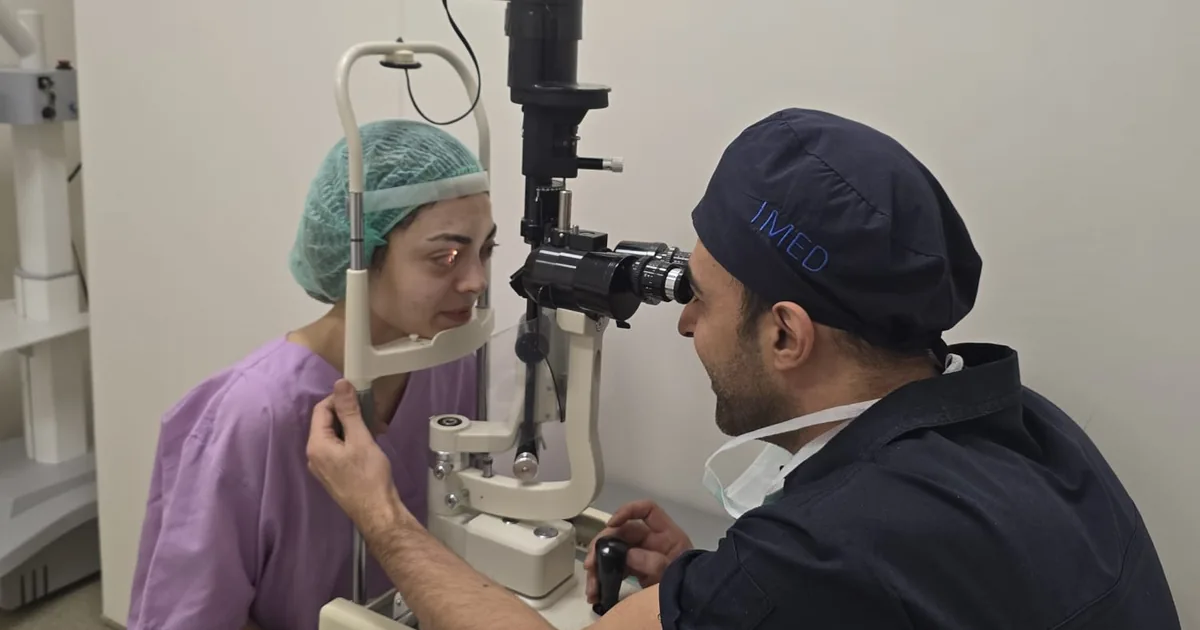
An eye examination is not performed only to determine a glasses prescription. During a comprehensive eye examination, visual acuity, the front and back structures of the eye, intraocular pressure, the cornea, natural lens, retina, macula and optic nerve are assessed.
Some eye diseases may not cause noticeable symptoms in their early stages. For this reason, regular eye examinations are important even for people who believe they see well, as they may help detect eye conditions at an earlier stage.
During the examination, factors such as age, current symptoms, previous eye conditions, glasses or contact lens use, prior eye surgery and family history of eye disease are also considered.
How is an eye examination performed?
An eye examination does not consist of a single test. Different assessments may be carried out according to the patient's age, symptoms and individual risk factors for eye disease.
1. Eye symptoms and medical history are reviewed
Before the examination, the patient's current symptoms and eye history are reviewed.
For example:
- Blurred vision
- Reduced distance or near vision
- Eye strain
- Headache
- Double vision
- Eye pain
- Redness
- Light sensitivity
- Flashes of light
- Floaters
The onset of these symptoms and how they have progressed are evaluated.
Previous eye surgery, glasses or contact lens use, existing eye conditions and a family history of eye disease are also important.
2. Visual acuity is measured
Visual acuity testing is one of the basic components of an eye examination.
Distance vision and, when necessary, near vision are assessed. Vision with the patient's current glasses may be compared with unaided vision.
However, good visual acuity does not necessarily mean that the eye is completely healthy.
For example, visual acuity may remain normal for a long time in the early stages of glaucoma or certain retinal diseases.
3. The glasses prescription is assessed
Myopia, hyperopia, astigmatism and age-related difficulty with near vision, known as presbyopia, are evaluated.
A glasses prescription is determined not only from device measurements but by considering the patient's vision together with the findings of the eye examination.
In children and certain special situations, a cycloplegic or dilated examination may be required for a more accurate assessment.
4. Eye movements and alignment are assessed
The doctor evaluates whether the eyes move together normally and whether they are aligned toward the same point.
This is particularly important when investigating:
- Strabismus
- Latent strabismus
- Double vision
- Restricted eye movements
In children, assessing eye alignment is especially important for the early detection of strabismus and amblyopia.
5. The front part of the eye is examined
The anterior structures of the eye are examined in detail with a slit-lamp biomicroscope.
The examination may include:
- Cornea
- Conjunctiva
- Iris
- Pupil
- Anterior chamber
- Natural lens
This examination may identify dry eye and ocular-surface problems, corneal diseases, some infections and inflammation, as well as cataract.
6. Intraocular pressure is measured
Measuring intraocular pressure is particularly important when evaluating glaucoma.
However, normal eye pressure does not completely rule out glaucoma.
Glaucoma assessment may also include evaluation of the optic nerve and retinal nerve fibre layer, and when required, tests such as visual field testing and OCT.
7. The retina and macula are examined
The retina at the back of the eye and the macula, which is responsible for central vision, are examined.
This assessment may investigate:
- Retinal tears
- Retinal detachment
- Diabetic retinopathy
- Macular diseases
- Age-related macular degeneration
- Retinal vascular diseases
- Vitreous problems
- Bleeding inside the eye
When necessary, the pupils may be dilated with eye drops so that the retina can be examined in greater detail. You can also read more about retinal surgery and treatment.
Which conditions are assessed during an eye examination?
A comprehensive eye examination can help identify many eye conditions at an early stage.
Refractive errors
- Myopia
- Hyperopia
- Astigmatism
- Presbyopia
Cataract
Cataract is a loss of transparency of the natural lens of the eye and is especially common with increasing age.
For detailed information, visit our Cataract page.
Glaucoma
Glaucoma is an eye disease that can cause progressive damage to the optic nerve. Because it may not produce obvious symptoms in its early stages, regular eye checks are important.
Retinal and macular diseases
During an eye examination, the retina and macula can be assessed for a wide range of conditions.
Retinal assessment is particularly important for people with diabetes, older adults and those who develop new visual symptoms.
Corneal diseases
Corneal examination can identify various corneal diseases and irregularities.
If keratoconus is suspected, advanced imaging such as corneal topography or tomography may be required.
Strabismus and eye movement disorders
By assessing eye alignment and movements, strabismus, latent strabismus and some causes of double vision can be investigated.
Amblyopia
Especially in children, it is important to assess for amblyopia together with refractive errors and strabismus.
When is OCT performed during an eye examination?
OCT (Optical Coherence Tomography) is an imaging method that provides detailed cross-sectional images of structures such as the retina, macula and optic nerve.
Not every patient needs OCT.
However, it may be required in cases such as:
- Suspected retinal disease
- Macular disease
- Diabetic retinal disease
- Assessment of age-related macular degeneration
- Suspected glaucoma
- Optic nerve disease
- Unexplained reduction in vision
OCT does not replace an eye examination. It is an important diagnostic test that supports the clinical findings.
Why are the pupils dilated?
In some patients, dilating the pupils with eye drops allows a more detailed examination of the retina and the back of the eye.
A detailed retinal examination may be required particularly in people with:
- Suspected retinal disease
- Diabetes
- High myopia
- Flashes of light
- New-onset floaters
- Suspected retinal tear or detachment
After the pupils are dilated, temporary blurred near vision and increased light sensitivity may occur.
When should you have an eye examination?
The frequency of eye examinations varies according to age, existing eye conditions and individual risk factors.
If you have a visual symptom
An eye examination should be arranged when new symptoms such as blurred vision, eye pain, double vision, flashes of light or floaters occur.
If you wear glasses
If you can no longer see clearly with your current glasses or think your prescription has changed, you should have an eye examination.
If you have diabetes or risk factors for eye disease
Diabetes, a family history of glaucoma, high myopia or previous eye surgery may require closer and more individually planned follow-up.
In children
Because visual development continues during childhood, early recognition of eye problems is important.
An eye examination should not be delayed if a child shows signs such as:
- An eye turning inward or outward
- Closing one eye to see
- Sitting very close to the television or screen
- Difficulty seeing the board at school
- Tilting the head to look
- Frequent blinking
- Difficulty while reading
When is an urgent eye examination needed?
Some eye symptoms should not wait for a routine appointment.
Urgent eye assessment may be necessary in situations such as:
- Sudden loss of vision
- New and intense flashes of light
- A sudden increase in the number of floaters
- A curtain or shadow in the field of vision
- Sudden-onset double vision
- Severe eye pain with reduced vision
- Eye trauma
Flashes of light and new-onset floaters can sometimes be symptoms of serious conditions such as a retinal tear or retinal detachment.
Is an eye examination the same as a glasses test?
No.
Determining a glasses prescription is only one part of a comprehensive eye examination.
The aim of an eye examination is not only to improve vision but also to assess the overall health of the eyes.
For this reason, even people with good vision should have eye checks at intervals appropriate for their age and risk factors.
How long does an eye examination take?
The duration of an eye examination varies from person to person.
A basic vision and glasses-prescription assessment does not take the same amount of time as a comprehensive evaluation of the retina, glaucoma or cornea.
When necessary, additional tests such as pupil dilation, OCT, corneal topography or tomography, biometry and visual field testing may be performed.
Eye examination in Istanbul
When having an eye examination in Istanbul, it is important to consider not only measurement of a glasses prescription but also assessment of the overall health of the eyes.
If cataract, retinal disease, glaucoma, corneal disease or strabismus is suspected, the examination may need to be planned in greater detail according to the condition being investigated.
Eye examination in Güneşli and Bağcılar
For patients seeking an eye examination in Güneşli or Bağcılar, the scope of the examination is determined according to age, symptoms and individual risk factors for eye disease.
Visual acuity, the anterior eye, intraocular pressure, natural lens, retina, macula and optic nerve may be assessed. When clinically necessary, additional investigations such as OCT, corneal topography or tomography, biometry and visual field testing can be planned.
Patients from nearby districts such as Bahçelievler, Güngören and Esenler may also have a comprehensive eye examination and any required advanced investigations planned according to their individual needs.
Eye examination with Dr. Bilal Kavşut
During an eye examination, it is important to assess not only the patient's current complaint but the eye as a whole.
Dr. Bilal Kavşut places importance on reviewing the patient's symptoms and eye history together with assessment of visual acuity, the anterior and posterior segments of the eye, intraocular pressure, retina, macula and optic nerve.
When required, OCT, corneal imaging, biometry, visual field testing or other advanced diagnostic examinations may be planned according to the examination findings.
For patients requiring assessment for cataract, retinal disease, laser eye treatment, intraocular lens options or other eye conditions, treatment options are considered according to the findings of the examination.
For more information about the doctor's background and areas of practice, visit the About page.
Frequently asked questions about eye examinations
Is an eye examination only for checking a glasses prescription?
No. Determining a glasses prescription is only one part of the examination. The front and back of the eye, intraocular pressure, retina, macula and optic nerve may also be assessed.
My vision is good. Do I still need an eye examination?
Yes. Some eye diseases may not cause noticeable vision loss in their early stages. Regular eye checks can help detect these conditions earlier.
Which conditions can be detected during an eye examination?
Refractive errors, cataract, glaucoma, retinal and macular diseases, some corneal conditions, strabismus and amblyopia may be identified during an eye examination.
Is OCT performed during an eye examination?
OCT may be performed when clinically necessary. It is particularly useful when assessing the retina, macula and optic nerve.
Why are the pupils dilated?
In some patients, the pupils are dilated with eye drops so that the retina and the back of the eye can be examined in greater detail.
When is an eye examination urgent?
Sudden vision loss, new flashes of light, a sudden increase in floaters, a curtain or shadow in the field of vision, sudden double vision or severe eye pain with reduced vision should be assessed without delay.
Conclusion
An eye examination is much more comprehensive than simply determining a glasses prescription.
Regular eye checks can help identify conditions such as cataract, glaucoma, retinal and macular diseases, corneal problems, strabismus, amblyopia and refractive errors at an earlier stage.
If a new change in vision, eye pain, double vision, flashes of light, floaters or a curtain-like shadow in the field of vision occurs, a routine appointment should not be awaited.
For people planning an eye examination in Istanbul, Güneşli, Bağcılar, Bahçelievler or Güngören, it is important to choose a comprehensive assessment that considers overall eye health rather than only the glasses prescription.