Silent progression
Open-angle glaucoma may cause no pain or noticeable vision problems for a long time.

Glaucoma is a group of eye conditions that can progressively damage the optic nerve. Many patients have no obvious symptoms in the early stages, so regular eye examinations are important.
Glaucoma is often associated with intraocular pressure, but it can also develop when pressure readings are normal. Treatment aims to reduce pressure to an individual target and slow further damage to the optic nerve.
Dr. Bilal Kavşut provides glaucoma examinations, assessment of test results and follow-up planning at his practice in Güneşli, Bağcılar, Istanbul.
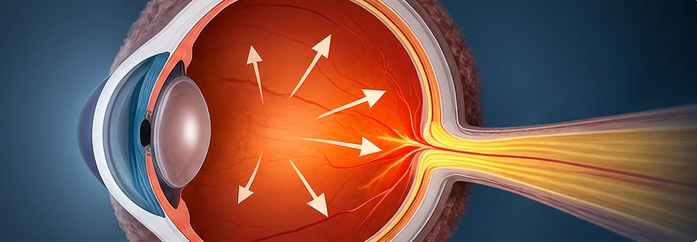
Glaucoma develops when the optic nerve, which carries visual information from the eye to the brain, is damaged. Elevated intraocular pressure is an important risk factor, but glaucoma is not simply high eye pressure.
The most common form, open-angle glaucoma, usually progresses slowly without symptoms. The less common acute angle-closure glaucoma may cause sudden eye pain, redness, blurred vision, halos around lights and nausea; urgent medical assessment is required.
Vision lost due to glaucoma generally cannot be recovered. Early diagnosis and regular follow-up are important for preserving remaining vision.

Glaucoma may cause no symptoms, especially in the early stages. As the disease progresses, peripheral visual field loss may develop. Sudden painful symptoms may indicate another type of glaucoma.
Open-angle glaucoma may cause no pain or noticeable vision problems for a long time.
Side vision may decrease as the condition progresses; central vision can also be affected in advanced stages.
Older age, a family history of glaucoma, high intraocular pressure, certain eye diseases and prolonged corticosteroid use may increase risk.
Severe eye pain, redness, sudden blurred vision, headache or nausea require urgent eye assessment.

A single intraocular pressure reading is not enough to diagnose or exclude glaucoma. The ophthalmologist assesses the optic nerve alongside the patient's risk factors.
Tonometry is used to measure intraocular pressure.
The optic nerve head and retinal nerve fibre layer are examined.
Structural changes and functional visual field loss are monitored.
Corneal thickness and the anterior chamber angle are assessed when needed.

Treatment depends on the type of glaucoma, intraocular pressure, optic nerve damage, rate of progression and the patient's general health. Treatment aims to control progression rather than reverse existing damage.
Medications with different mechanisms of action may be used to lower intraocular pressure. Regular use and follow-up are important.
Selective laser trabeculoplasty (SLT) or other laser procedures may be considered for suitable patients depending on the type of glaucoma.
If medication and laser treatment do not provide adequate control, or depending on the clinical situation, trabeculectomy, drainage implants or other suitable surgical techniques may be considered.
Intraocular pressure, visual fields and optic nerve changes are monitored at regular intervals; the treatment plan is updated when necessary.
Important: Glaucoma medication should not be stopped or changed without medical advice. Follow-up frequency is tailored to each patient's condition.
Managing glaucoma requires not only an accurate diagnosis but also comparing changes over time and developing a sustainable follow-up plan.
Dr. Bilal Kavşut, drawing on his professional experience in ophthalmology, reviews examination and test findings together and considers monitoring and treatment options suited to the patient's needs.
If you suspect glaucoma, have elevated eye pressure or a family history of glaucoma, you can contact the practice in Güneşli, Bağcılar, Istanbul for an assessment.
Glaucoma is a group of eye diseases that can damage the optic nerve and cause visual field loss. Intraocular pressure is an important risk factor, but it is not high in every patient.
The most common type usually has no symptoms at first. Peripheral vision may decline as it progresses. Sudden severe pain, redness and blurred vision require urgent assessment.
Optic nerve damage caused by glaucoma is generally irreversible. However, controlling intraocular pressure with medication, laser treatment or surgery may help reduce the risk of progression.
There is no single safe or dangerous pressure value for everyone. Glaucoma can occur with normal pressure; readings must be interpreted alongside optic nerve findings and other tests.
Eye drops and/or laser treatment can control pressure in many patients. Some patients may require surgery; the decision depends on the type and course of glaucoma.
Follow-up intervals vary according to disease stage, progression risk and treatment response. The ophthalmologist determines the appropriate frequency.
If untreated or progressive, glaucoma can cause severe and permanent vision loss. Early diagnosis and regular monitoring are important for reducing this risk.
Contact us to learn more about eye pressure, glaucoma diagnosis, treatment options and ongoing monitoring, or to arrange an examination with Dr. Bilal Kavşut.