
- ENG
Laser Eye Surgery: LASIK, PRK, TransPRK (No Touch) and SMILE
Laser vision correction may be performed in suitable patients with refractive errors such as myopia, hyperopia and astigmatism to reduce dependence on glasses or contact lenses. The most appropriate technique is determined after a comprehensive eye examination and corneal assessment.
Examination and appointmentExplore the techniques
LASIK
A laser technique performed by creating a corneal flap.
PRK / TransPRK
Surface laser treatments performed without creating a flap.
SMILE
A technique performed through a small incision.
Individualised Selection
The technique is selected after examination and measurements.
What is laser eye surgery?
Laser eye surgery refers to procedures that reshape the cornea to alter the eye's refractive power. In suitable patients, the aim is to reduce dependence on glasses or contact lenses caused by myopia, hyperopia or astigmatism.
These treatments include several different techniques rather than a single procedure. LASIK, PRK, TransPRK and SMILE use different surgical approaches. A newer technique is not necessarily the most appropriate option for every patient.
Who may be suitable for laser eye surgery?
Suitability is not determined by age or refractive error alone. The degree and stability of the refractive error, corneal thickness and structure, corneal topography, ocular surface health, overall eye health and the patient's expectations are assessed together.
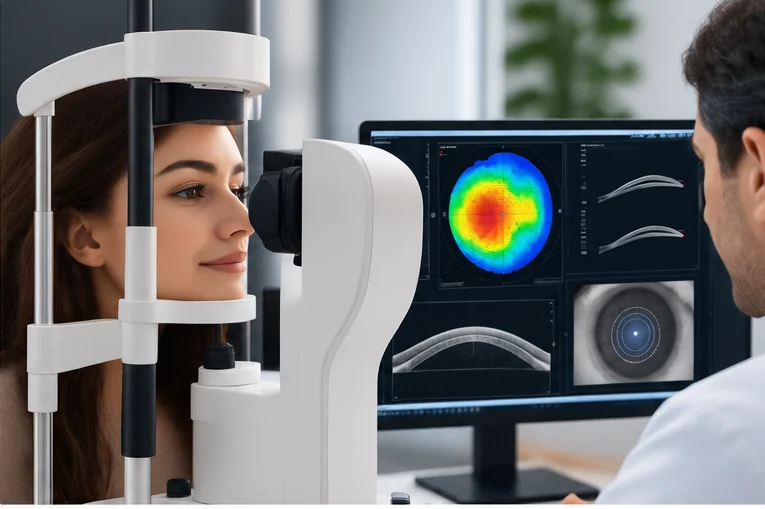
Corneal structure is an important part of treatment planning
The choice of laser technique is not based on refractive error alone. Corneal thickness, shape, topographic characteristics and ocular surface findings are assessed together.
Differences between LASIK, PRK, TransPRK and SMILE
LASIK
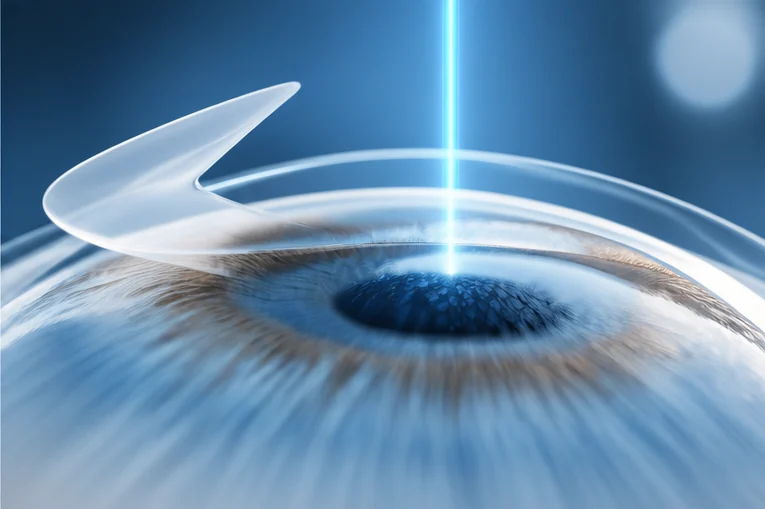
A thin flap is created in the cornea. After laser treatment, the flap is repositioned. Visual recovery is relatively rapid in most patients.
PRK
After the corneal epithelium is removed, an excimer laser is applied to the corneal surface. No flap is created, and recovery during the first few days may be slower than with LASIK.
TransPRK / No Touch
This is a surface laser technique in which epithelial removal and corneal laser treatment are performed using the laser system.
SMILE
A lenticule created by the laser within the cornea is removed through a small incision. A large corneal flap is not created.
Quick comparison of the techniques
| Technique | Approach | Key difference |
|---|---|---|
| LASIK | Flap + laser | Visual recovery is generally rapid. |
| PRK | Surface laser | No flap is created; the corneal surface needs time to heal. |
| TransPRK | Surface laser | A surface laser treatment in which the procedure is performed using the laser system. |
| SMILE | Small incision | A large corneal flap is not created. |
Which laser technique is suitable for me?
There is no single “best laser technique” for every patient. Treatment selection is based on a combined assessment of refractive error, corneal thickness and shape, ocular surface health, existing eye conditions, age and individual needs.
Preoperative eye examination
In addition to visual acuity and refraction measurements, corneal structure and thickness, ocular surface health and other relevant ocular findings are assessed. A suspicious corneal structure or another eye condition may alter the treatment plan.
The same laser technique is not suitable for every eye
Our priority in laser treatment is to preserve long-term eye health. The information on this page and the descriptions of the different techniques are provided for general informational purposes. Following a detailed examination, Dr. Bilal Kavşut believes that treatment should be planned individually by taking into account many factors, including your corneal structure, retinal health, refractive error, occupation, ability to comply with prescribed medication and postoperative care, and individual characteristics. You are encouraged to share your preferences and concerns; however, the treatment that is most appropriate for you should ultimately be determined by your ophthalmologist.
LASIK, PRK, TransPRK and SMILE have different technical characteristics. The appropriate technique is determined after a detailed examination and measurements.
What does the treatment process involve?
1. Detailed examination
Refractive error, the cornea and overall eye health are assessed.
2. Technique selection
The appropriate technique and alternatives are considered according to the examination findings.
3. Treatment and follow-up
After treatment, a follow-up schedule appropriate to the technique is arranged.
Recovery
Recovery varies according to the technique used and the individual characteristics of the eye. Visual recovery is generally faster after LASIK and SMILE, whereas surface treatments such as PRK and TransPRK may cause more discomfort and blurred vision during the first few days while the corneal epithelium heals.
Potential risks and side effects
Possible effects include dry eye, temporary blurred or fluctuating vision, halos and glare, changes in night vision, undercorrection or overcorrection and, rarely, the need for additional treatment.
Recovery may vary depending on the technique
Visual recovery and the time required to return to daily activities may vary depending on the technique used and individual eye characteristics. Follow-up examinations are an important part of postoperative care.

Detailed assessment for laser eye surgery
The aim of assessment for laser eye surgery is not simply to measure refractive error, but to determine whether the eye is suitable for laser treatment. At Dr. Bilal Kavşut's private clinic in Güneşli, candidates for laser vision correction undergo an assessment of their ocular and corneal findings and are informed about the options that may be appropriate for them.
Frequently Asked Questions
Is laser eye surgery painful?
The ocular surface is numbed with anaesthetic eye drops during the procedure. The level of discomfort after treatment may vary depending on the technique used.
Which is better: LASIK, No Touch or SMILE?
No single technique is superior for everyone. Corneal structure, refractive error, ocular surface health and other clinical findings all play a role in selecting the most appropriate technique.
When will my vision become clear after laser eye surgery?
Visual recovery varies according to the technique. Recovery is generally faster after LASIK and SMILE, whereas PRK and TransPRK are surface treatments and may require a longer recovery period while the corneal epithelium heals.
For a more detailed comparison, see our guide to LASIK, PRK, TransPRK and SMILE
To assess your suitability for laser eye surgery
You can arrange an examination for a detailed assessment of your eyes and corneal structure.
Contact via WhatsApp