
What Is a Cataract? Symptoms, Treatment and Cataract Surgery
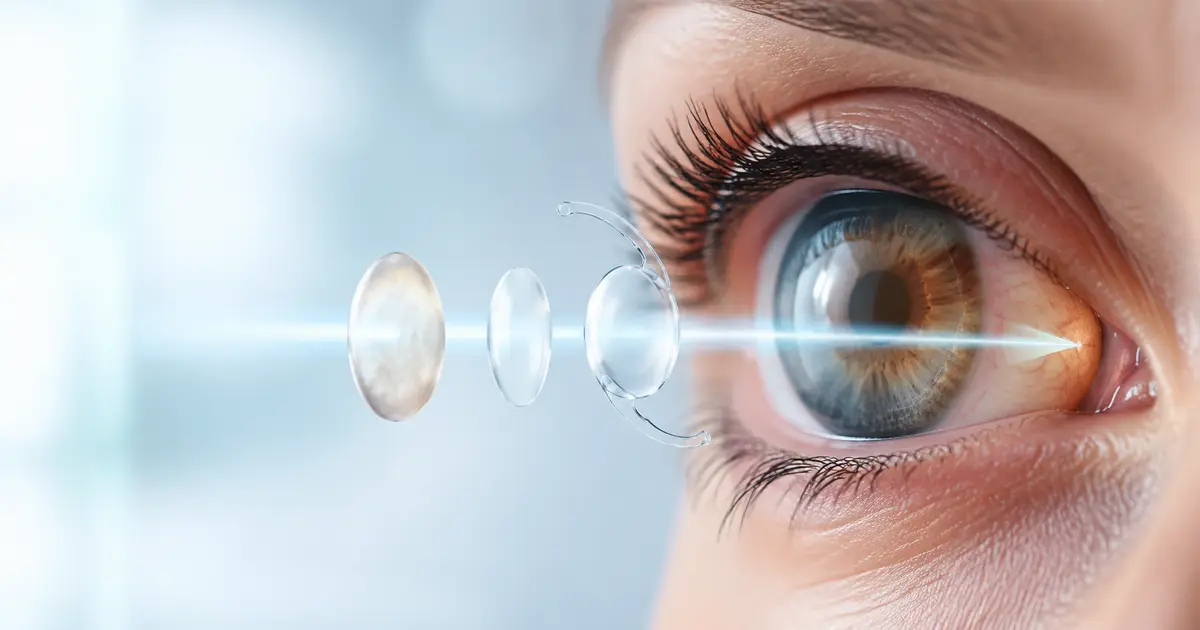
A cataract is a clouding of the eye’s natural lens. It most commonly develops with age, although diabetes, eye injuries, long-term use of certain medicines and various eye conditions may also contribute to cataract formation.
As a cataract progresses, symptoms may include blurred vision, reduced night vision, glare, faded colours and a decline in visual quality during everyday activities.
The definitive treatment for cataract is surgery. As part of cataract treatment, the cloudy natural lens is removed and replaced with an intraocular lens selected according to the patient’s eye structure, visual needs and lifestyle. Careful assessment, biometric measurements and personalised lens selection are important parts of planning the expected visual outcome.
What are the symptoms of cataract?
Cataracts often progress slowly and may not be noticed at first. Symptoms can include:
- Blurred or reduced distance and near vision,
- Difficulty seeing at night and discomfort from oncoming headlights,
- Glare or halos around lights,
- Colours appearing faded or yellowish,
- Frequent changes in glasses prescription,
- Needing more light for reading or computer work,
- Reduced contrast and insufficient visual quality for daily tasks.
Symptoms differ from person to person, so the effect on daily life should not be assessed by visual acuity alone.
What causes cataract?
Age-related changes in the natural lens are the most common cause. Other factors may include:
- Diabetes,
- Eye trauma,
- Long-term corticosteroid use,
- Previous eye surgery,
- Certain eye diseases,
- Congenital or childhood conditions.
At what age do cataracts begin?
Cataracts are more common later in life, but they are not a single condition that begins at one particular age. In some people, they can affect visual quality earlier. The key consideration is how much the cataract affects the person’s vision and daily activities.
When should cataract surgery be considered?
A cataract does not need to become “fully mature,” and vision does not need to deteriorate to an advanced level before surgery is considered. The decision is mainly based on its effect on quality of life. Surgery may be discussed when night driving, reading, computer use or watching television becomes difficult, or when glare and reduced visual quality interfere with everyday activities. There is no single cataract “number” that applies to every patient.
How is cataract surgery performed?
Phacoemulsification is the most commonly used technique in modern cataract surgery. The natural lens is removed through a small incision with the aid of a specialised device and an artificial intraocular lens is placed inside the eye. Planning also considers the health of the cornea, retina and macula, as well as the eye’s optical characteristics.
Which lens is used in cataract surgery?
The same lens is not suitable for everyone. Distance and near-vision expectations, computer use, night driving, astigmatism, corneal features, retinal and macular health, glaucoma and the patient’s attitude towards glasses are considered together. The “best lens” is therefore the one most appropriate for the individual eye and lifestyle.
Types of intraocular lenses used in cataract surgery
Monofocal lens
Monofocal lenses aim for clear vision at one distance, most often distance vision. Reading glasses may still be needed for near tasks.
Toric lens
Toric intraocular lenses may be considered for suitable patients with astigmatism. They aim to reduce corneal astigmatism and support a better visual result after surgery. Detailed corneal and biometric measurements are required before selection.
EDOF lens
Extended Depth of Focus (EDOF) lenses aim to provide a broader range of clear vision, especially at distance and intermediate ranges. Some EDOF lenses may also support near vision to a degree.
Trifocal lens
Trifocal lenses are multifocal intraocular lenses designed to reduce dependence on glasses at distance, intermediate and near ranges. They are not suitable for every patient; retinal, macular, corneal or optic nerve disease may influence the decision.
What is a “smart lens”?
“Smart lens” is a popular, non-medical term often used for trifocal, EDOF and other advanced intraocular lenses. There is no single medical lens category with this name. The important factor is not only the technology, but whether the lens suits the patient’s eye and expectations. More information is available on the intraocular lens treatment page.
Are advanced intraocular lenses suitable for everyone?
No. Lens selection requires particular care in patients with:
- Retinal or macular disease,
- Corneal problems,
- Advanced glaucoma,
- Other conditions that may affect visual quality.
The entire eye, rather than the cataract alone, should be assessed before surgery.
Which tests may be performed before cataract surgery?
Depending on the patient’s needs, assessment may include:
- Visual acuity and eye-pressure measurements,
- Biometry and corneal measurements,
- Astigmatism analysis,
- Retinal and macular examination,
- OCT,
- Corneal topography or tomography.
These examinations help plan the surgery and personalise the intraocular lens choice as much as possible.
Why should cataract and retinal health be assessed together?
Visual quality after surgery does not depend on the lens alone. Disease of the retina, particularly the macula, may limit vision even when cataract surgery is successful. This assessment can also influence whether an advanced multifocal lens is suitable. See the retinal surgery and treatment page for related information.
When does vision improve after cataract surgery?
Recovery varies from person to person. Some patients notice a clear improvement soon after surgery, while complete stabilisation may take longer. Prescribed drops should be used correctly and follow-up appointments should not be missed.
Will glasses be needed after cataract surgery?
This depends on the lens and the patient’s eye. Reading glasses may be needed after monofocal lens implantation. Trifocal and some EDOF lenses aim to reduce dependence on glasses across different distances, but no lens can guarantee complete freedom from glasses for every patient.
Does cataract surgery have risks?
Cataract surgery is commonly performed, but like every surgical procedure it has risks. Individual risk depends on eye structure, associated disease and the characteristics of the cataract and surgery, and should be discussed before the operation.
When should a patient seek urgent medical advice after surgery?
Contact an eye doctor without delay if any of the following occur:
- Severe or increasing eye pain,
- Marked loss of vision or intense redness,
- Sudden flashes of light,
- A sudden increase in floaters,
- A curtain or shadow in the visual field.
Cataract assessment in Güneşli and Bağcılar
For patients living in Güneşli, Bağcılar and nearby districts, cataract assessment should go beyond measuring visual acuity. The cornea, retina, macula and other eye structures are evaluated alongside the degree of cataract and the patient’s visual expectations. The same individual approach applies to patients attending from Bahçelievler, Güngören, Esenler and other surrounding areas.
Dr. Bilal Kavşut’s approach to cataract surgery
Before surgery, Dr. Bilal Kavşut considers the patient’s visual expectations, corneal and optical characteristics, retinal and macular health and associated eye disease when selecting treatment and an intraocular lens. Daily activities and postoperative expectations are considered when discussing monofocal, toric, EDOF and trifocal options. Learn more on the About Dr. Bilal Kavşut page.
Frequently asked questions about cataract
Must a cataract become fully mature before surgery?
No. The decision is based on reduced visual quality and the effect on daily life.
Is cataract surgery painful?
The eye is numbed with appropriate anaesthesia, so significant pain is not usually felt during surgery.
Will vision recover completely after cataract surgery?
If the cataract is the main cause of reduced vision, a marked improvement may be expected. Other disease affecting the retina, macula, cornea or optic nerve can limit the result.
Is a trifocal or an EDOF lens better?
There is no single answer for every patient. Eye structure, visual expectations, lifestyle and retinal and corneal health should be assessed together.
Can astigmatism be treated during cataract surgery?
Toric intraocular lenses may be used in suitable patients to reduce astigmatism.
Can cataract return after surgery?
Cataract does not return in the removed natural lens. The lens capsule can become cloudy later; this is often called “secondary cataract,” but has a different mechanism and may be treated with YAG laser in suitable patients.
Can both eyes be operated on at the same time?
Surgical planning depends on the condition of each eye and the selected approach. In many patients, the eyes are operated on in separate sessions.
Conclusion
Cataract is common later in life and may gradually reduce visual quality. Modern surgery removes the cloudy natural lens and replaces it with an intraocular lens suited to the patient’s eye and needs. Careful assessment, detailed measurements, retinal and corneal evaluation and appropriate lens selection are important parts of planning postoperative visual quality.